Spring Blooms In the Lower Crystal Watershed: Fourteen More Species
I spent two weeks in late April looking for blooms that were new to me in the lower Crystal River watershed. By the month's end, I had found some unexpected gems.
Readers of Get Out There will know that the majority of flowering plants covered by my field guide were observed in the montane and alpine portions of the Crystal’s drainage, generally above 8000 feet.
However, large tracts of the watershed are at lower elevations, spanning the sagebrush covered plains below Mt. Sopris, the red sandstone arroyos, and the scrub oak, pinion and juniper studded foothills along SH 133 outside Carbondale. Indeed, when it comes to territory, the area downstream (north) of Penny Hot Springs and Filoha Meadows comprises approximately 55% of the watershed’s roughly 232,000 acres (about 363 square miles).
This portion of the the drainage has fewer marked hiking trails trails, but can be accessed via two scenic and largely unpaved roads: the North Thompson Creek Road (Rt.108 running past Spring Gulch) and Prince Creek Road (Rt. 5) to the east, both of which run somewhat parallel to SH 133. I used these byways as a starting point to hike less-traveled paths and side roads for Spring blooms.
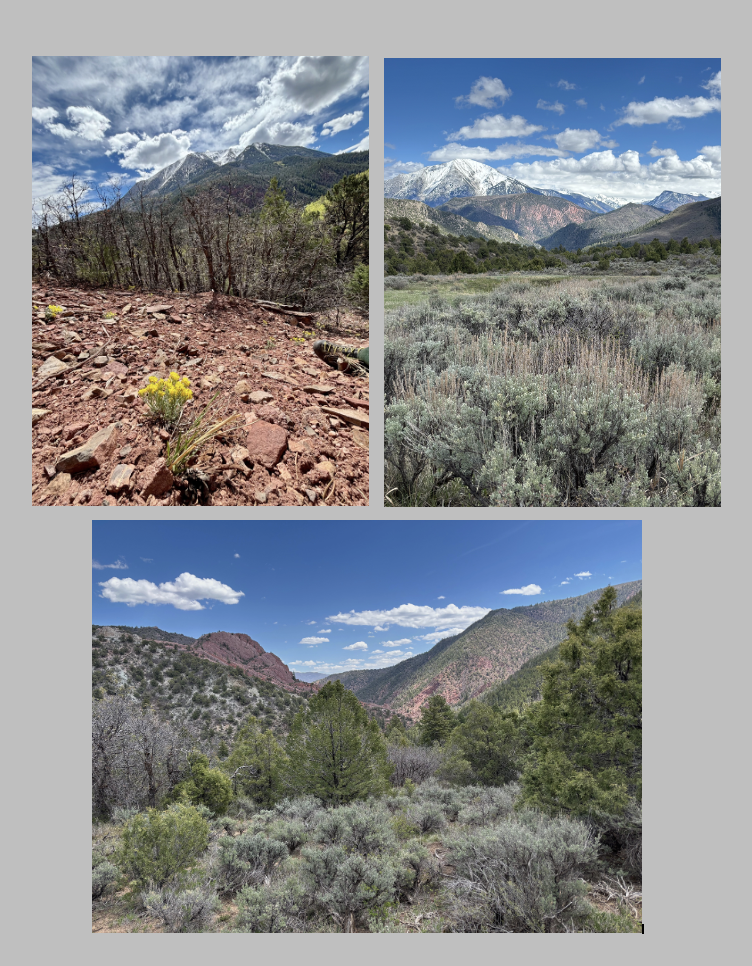
Top left: View from Perham Trail (off SH 133); Top right and bottom are views off Rt. 108.
After a half dozen forays, I felt pretty lucky to have added fourteen flowering species that I had not photographed before. Several of these are fairly common (e.g., Redstem Filaree; Gray’s Biscuitroot, Dwarf Bluebells, Longleaf Phlox). How had I missed them in prior years? But a few are comparatively rare (e.g., Ball Cactus, Kitten Tails) and seem limited to just a few sites in the watershed.
My finds were likely helped by some welcome precipitation throughout April which had (just) begun to make up for the historic drought across western Colorado. It was the warmest March on record in the region and the 2025-2026 Winter snowpack in the Elk Mountains was barely a quarter of the long term average. That has left the topsoil along many trails I walked much looser and more erosion-prone than I can recall. Hence, the runoff from Summer downpours, though welcome (for the flora) may be even more dramatic (and destructive) that usual.
As with the field guide, for ease of reference, photos of the plants I logged in April are organized by color. Common and scientific names appear below each photo.

Redstem Filaree, Erodium cicutarium

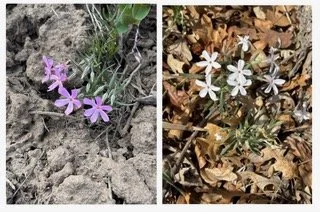
Longleaf Phlox, Phlox longifolia NOTE: This species also has white variants. See thumbnail below.
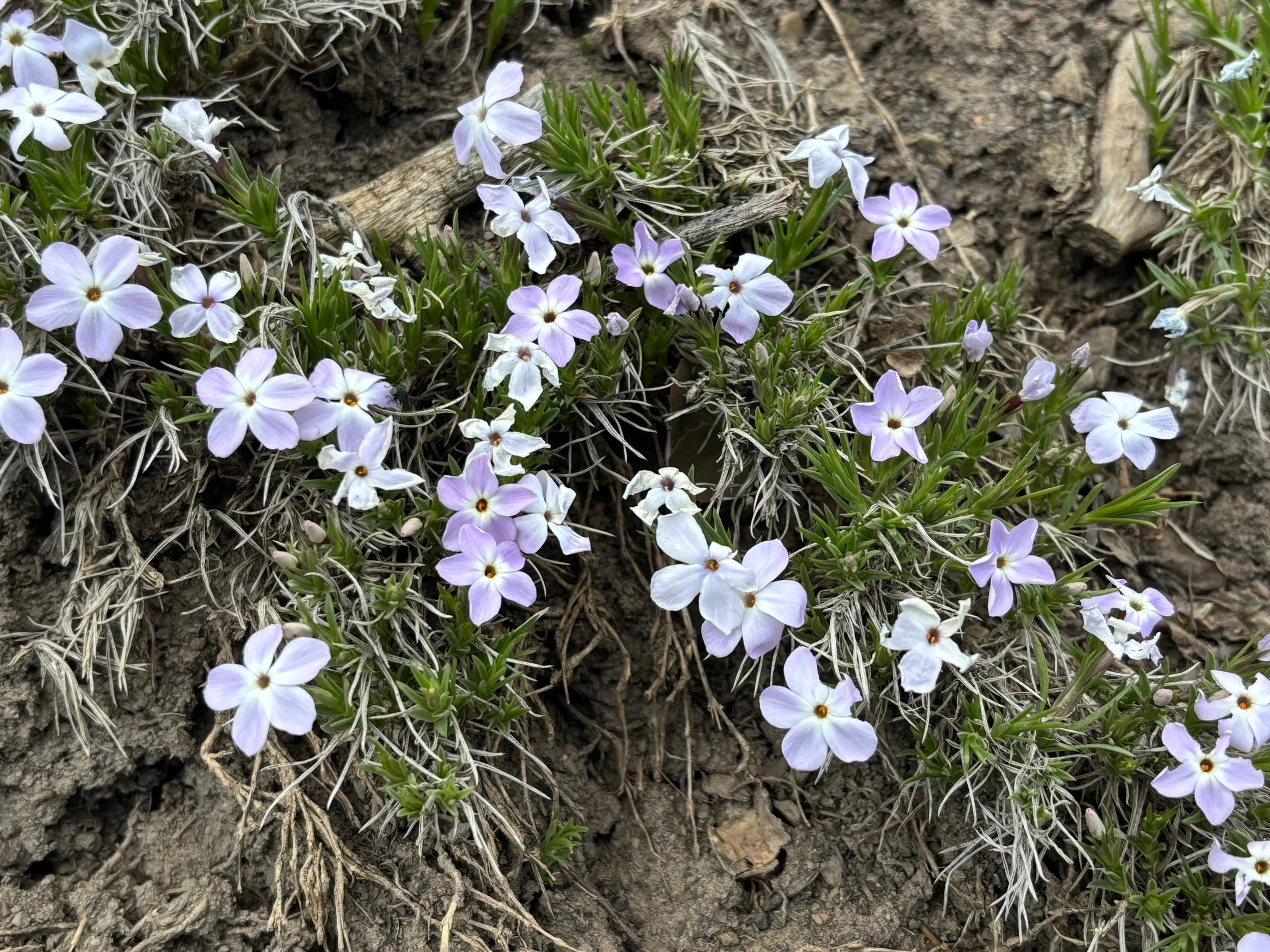
Spreading Phlox, Phlox canescens

Wax Current, Rebus cereum

Showy Indian Paintbrush, Castilla chromosa
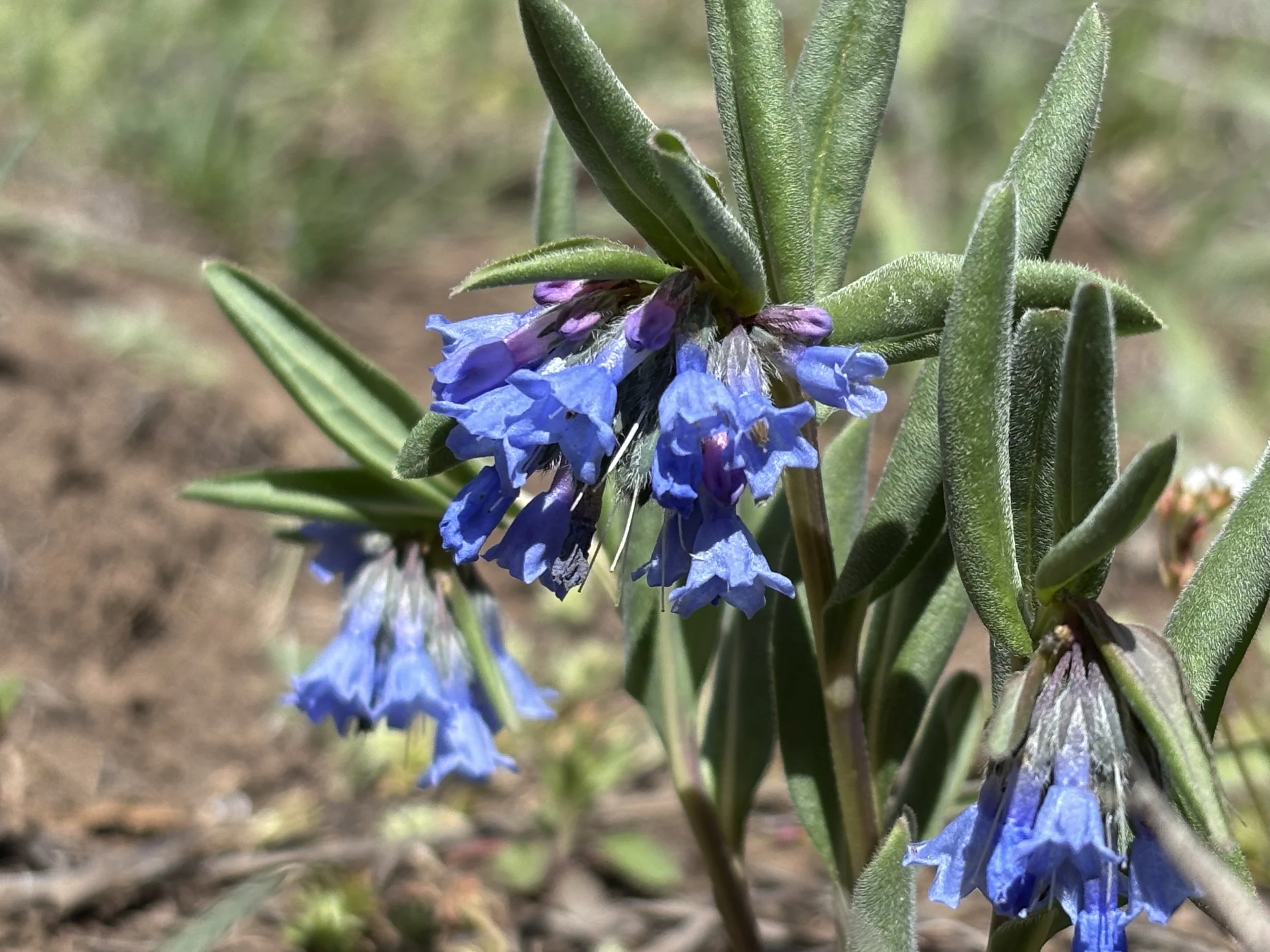
Dwarf Bluebells, Mertensia fusiformis

Ball Cactus, Pediocactus simpsonii

Ball Cactus, Pediocactus simpsonii

Arrowleaf Balsamroot, Balsamorhiza sagittata
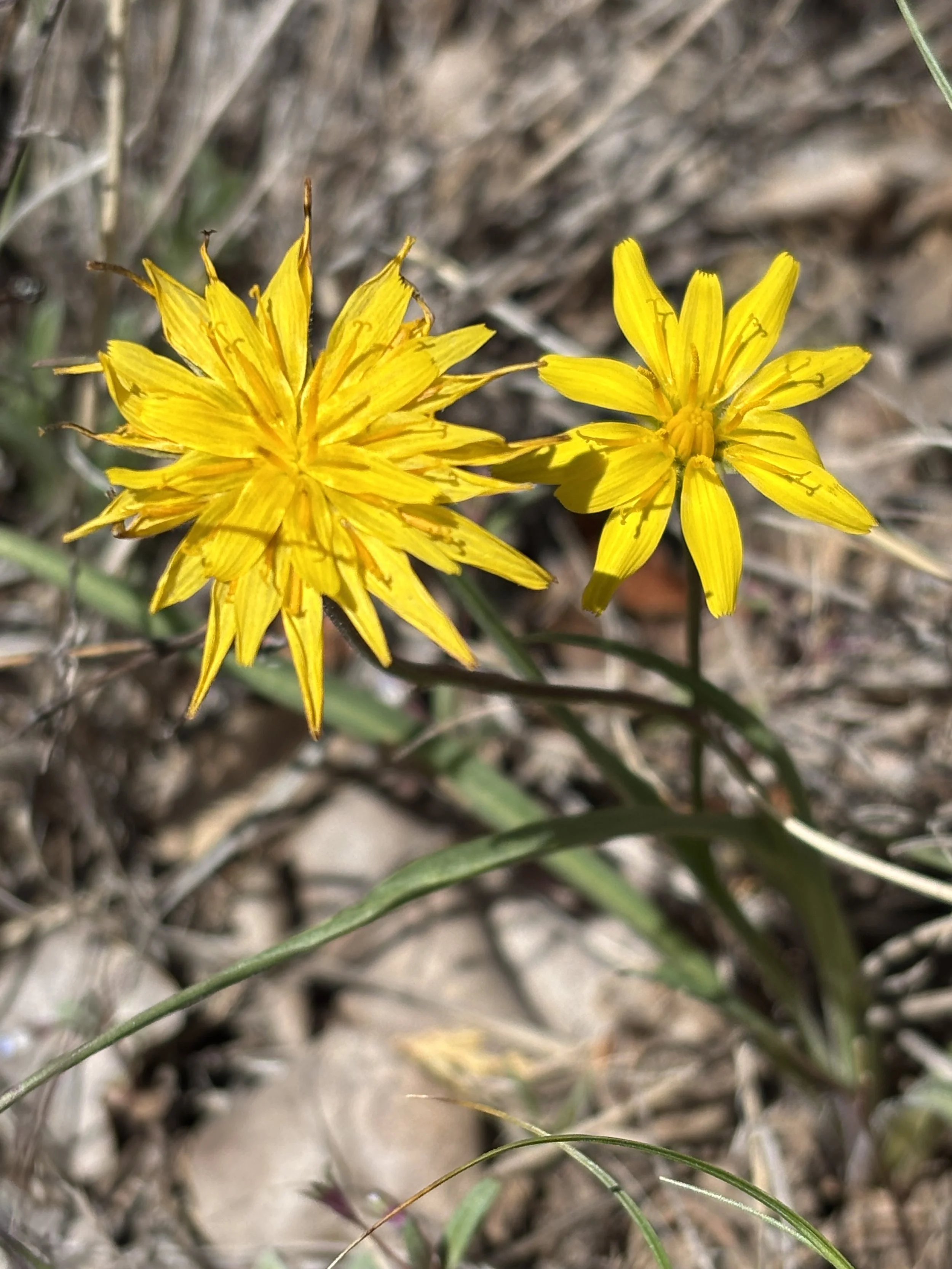
Nodding Microseris, Microseris nutans. NOTE: might also be an Agoseris species.

Gray’s Biscuitroot, Milfoil lomatium

Fungus Flower, Puccina monoica. NOTE: Bio-mimcry at its best, this rust fungus infects Boechera plants (Rockcress) in the Spring creating amazing flower-like forms. See p. 206 of Get Out There for the host plant.
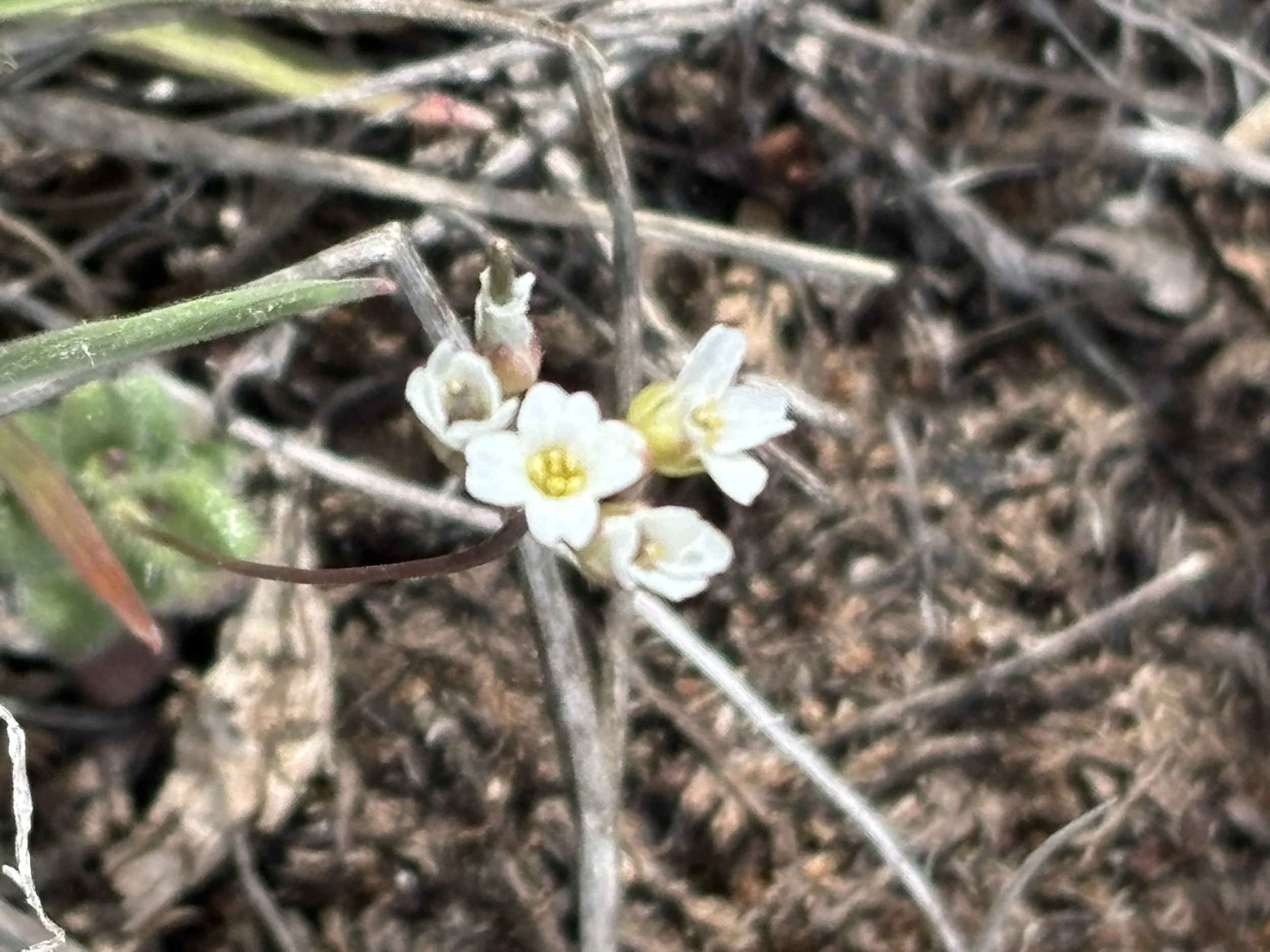
Wedgeleaf Draba, Tomostino cuneifolia

Patterson’s Milkvetch, Astralagus patersonii

Kitten Tails, Veronica plantaginea

Kitten Tails, Veronica plantaginea
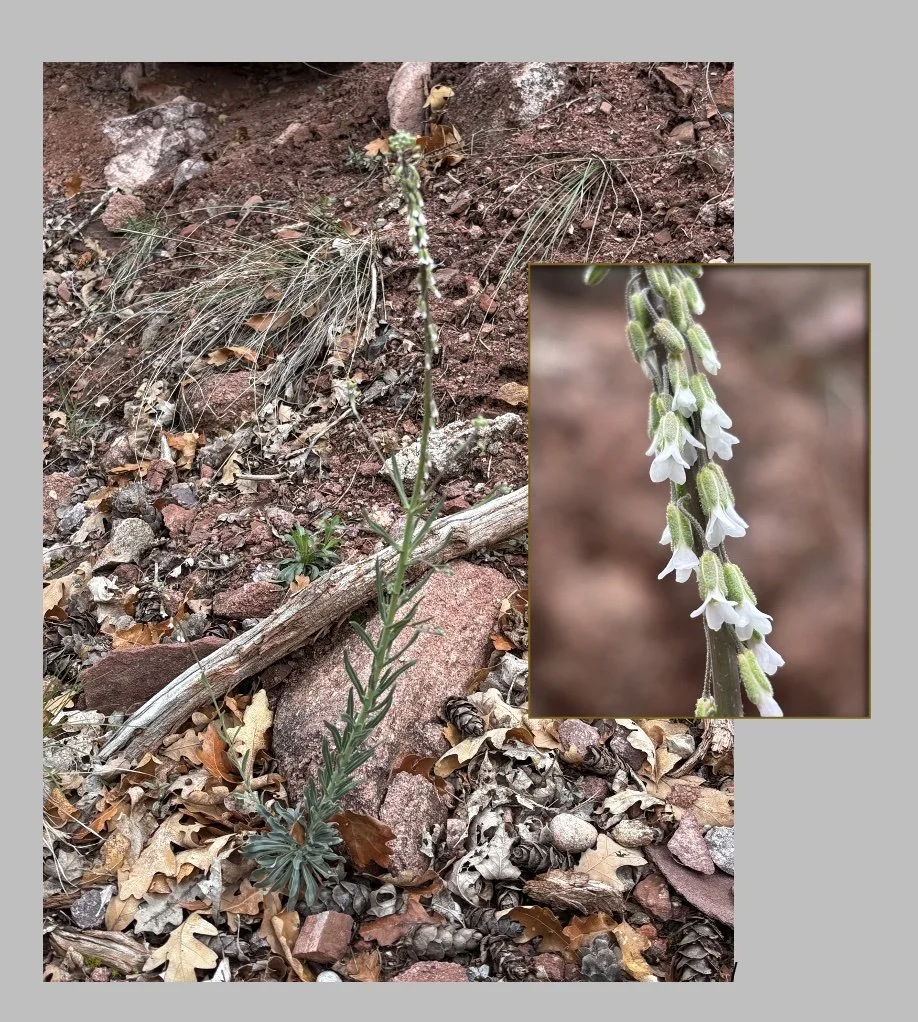
Rockcress Relaxed /Hairy, Bochera retrofracta
Please do let me know if you think any of the IDs may be in error. As with iNaturalist, botanizing is always better in community. (My original May 10 post was edited on May 16 to correct two errors , thanks to friends.)
I’d also welcome photos (and stories ) you might have of any novel or hard-to-find blooms in the Crystal watershed. You can contact me at info@gotwildflowers.com.
Yes, copies of Get Out There are still available (but stocks are limited; the first printing has almost sold out). Try these local book sellers while supplies last: Raspberry Ridge Cafe in Marble; White River Books in Carbondale and Explore Books in Aspen.