As spring begins to hint at summer (the last frost in Marble was May 28), my floristic exploration has moved up valley. It’s been as productive as the April forays with a clutch of new species, including one member of the mustard family (Brassicaceae) that does not appear to have been documented before in any of the counties covering the Crystal River watershed..
On May 24, after attending the annual conference of Colorado’s Native Plant Society (CoNPS) in Grand Junction , I joined a group of fellow CoNPS members who volunteered to help Colorado’s Statewide Natural Heritage Survey (SNHS) check up on two rare flowers. We worked in the Mancos shale-grey desert country southeast of Junction. A report on this project follows my update on local species - so scroll down past the photos if you want to start there..
New Plants In This Post
As with the field guide, for ease of reference, photos of the new (to Get Out There) plants logged over the last few weeks are organized by color. Common and scientific names appear below each specimen. All plants were photographed in the Crystal River watershed.
White/Green Flowers
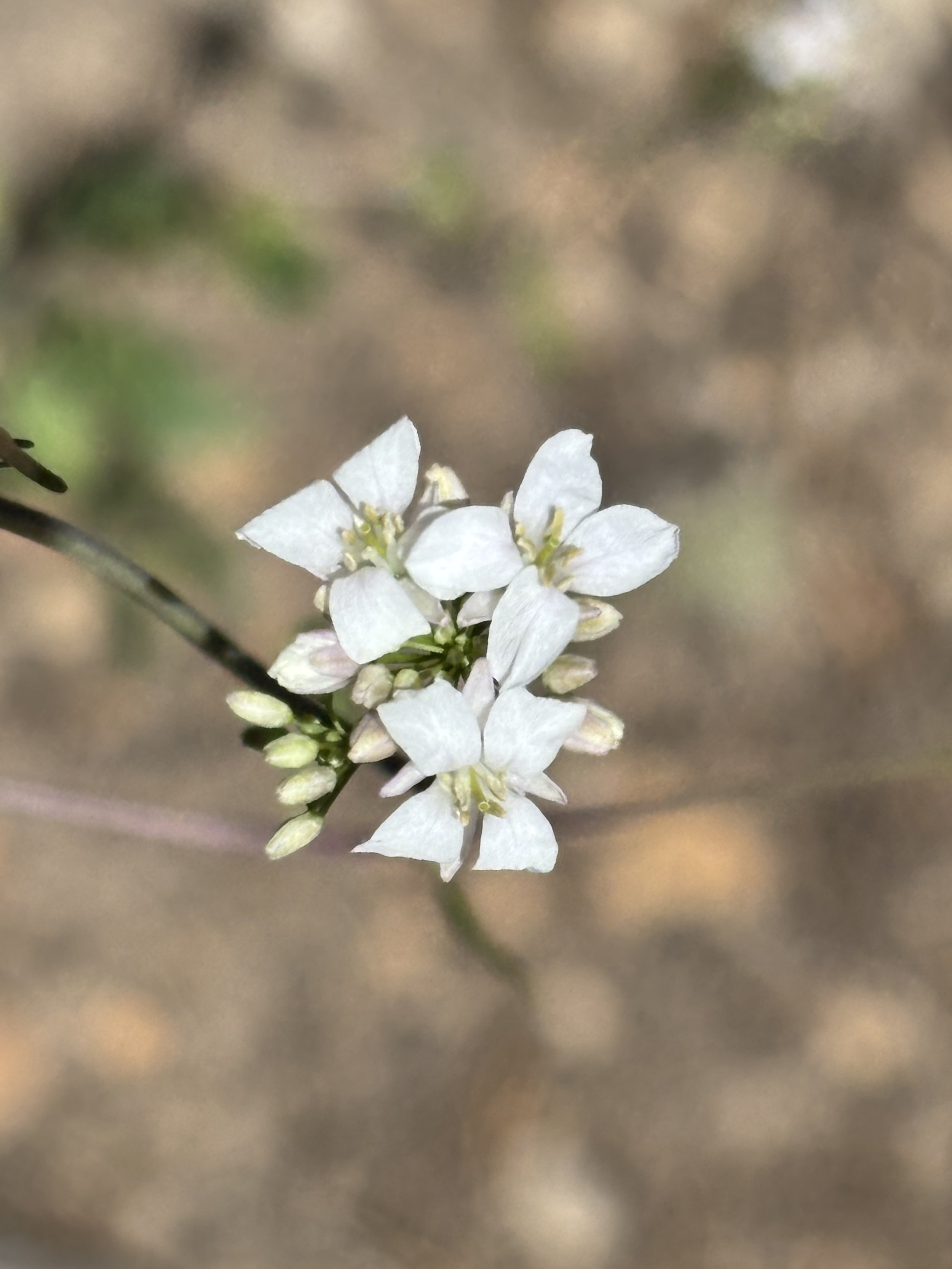


I think this first plant is a rare specimen of Purpus’ Tumble Mustard, Mostacillastrum purpusii (formerly Thelypodiopsis purpusii, but the taxon was changed in recent years. See: https://grokipedia.com/page/thelypodiopsis ).
I spotted the flower just off the Perham Trail at roughly 7,000’ on a rocky slope marked by pinyon and juniper. The four petaled flowers and overall structure put it squarely in the mustard family (Brassicaceae) but this particular species does not seem to have been recorded in any of the counties (Pitkin, Garfield, Gunnison) that span the Crystal’s watershed.. Based on my search of iNaturalist and BONAP.org (which has county-by-county maps by species) Mostacillastrum purpusii is also largely unknown in Colorado as its native habitat is mainly Utah, New Mexico and Texas. See this reference site which led me to my tentative ID: https://rockymountainsflora.com/details/White%20Round/Mustards.htm


These two photos show the Bulbous Woodland Star, Lithophragma glabrum. It’s a striking, delicate flower and much less common than its cousin L. parviflorum. (see p. 130 of Get Out There). It also reproduces in a unique way. The maroon-red bulbous growths along the stem are "bulblets" which fall to the ground, root, and produce new plants. There are no seeds. That makes the plant viviparous, i.e., it asexually produces plants genetically identical to itself as sprouts on its own stems. What a marvel !

Sand aster, Chaetopappa ericoides


Photos above show the Heartleaf Twistflower, Streptanthus cordatus. Its unusual purple green buds — calling out like the beaks of baby birds — make for an easy ID.
Blue/Purple Flowers
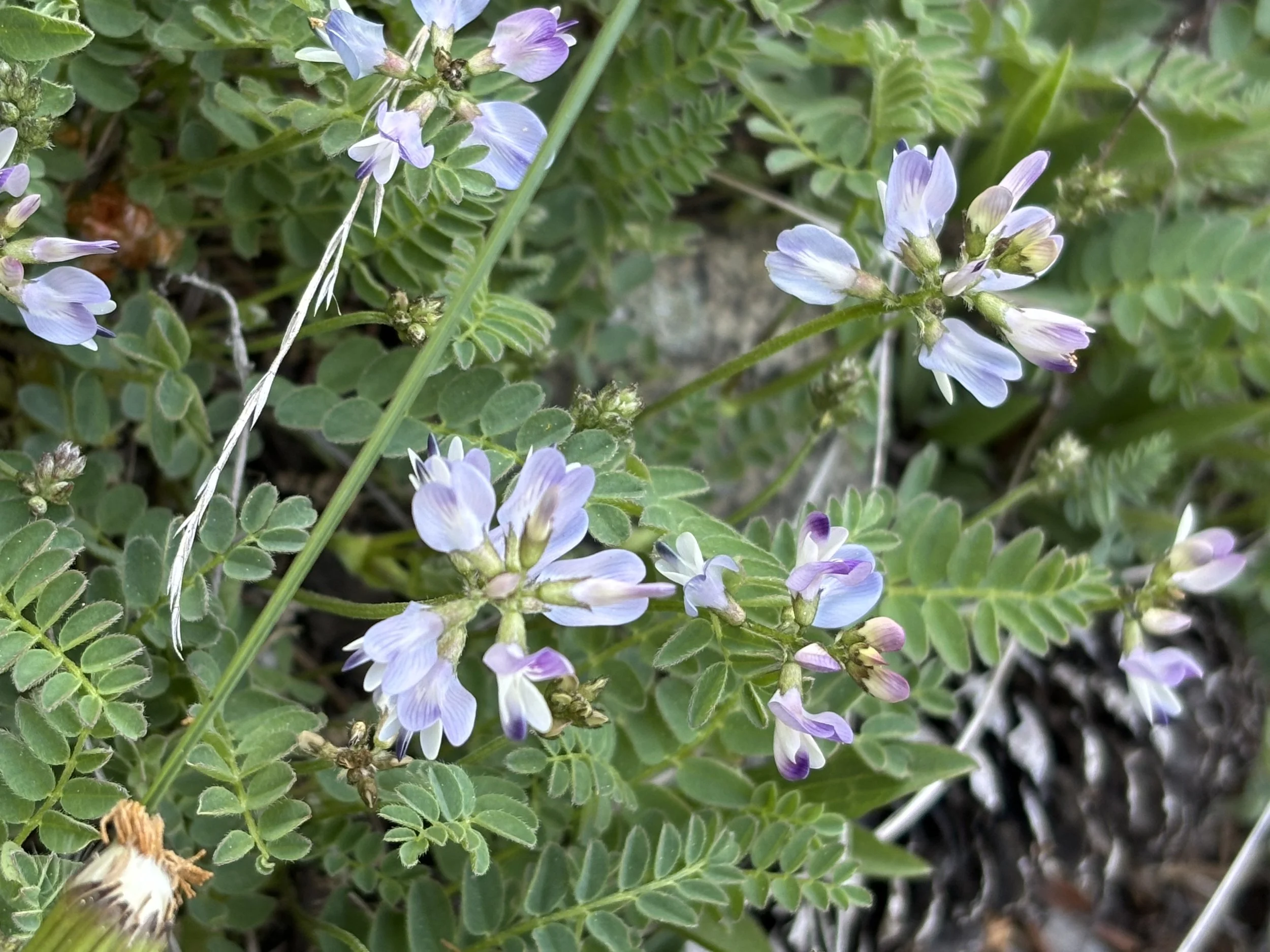
Blue Alpine Milkvetch, Astralagus alpinus

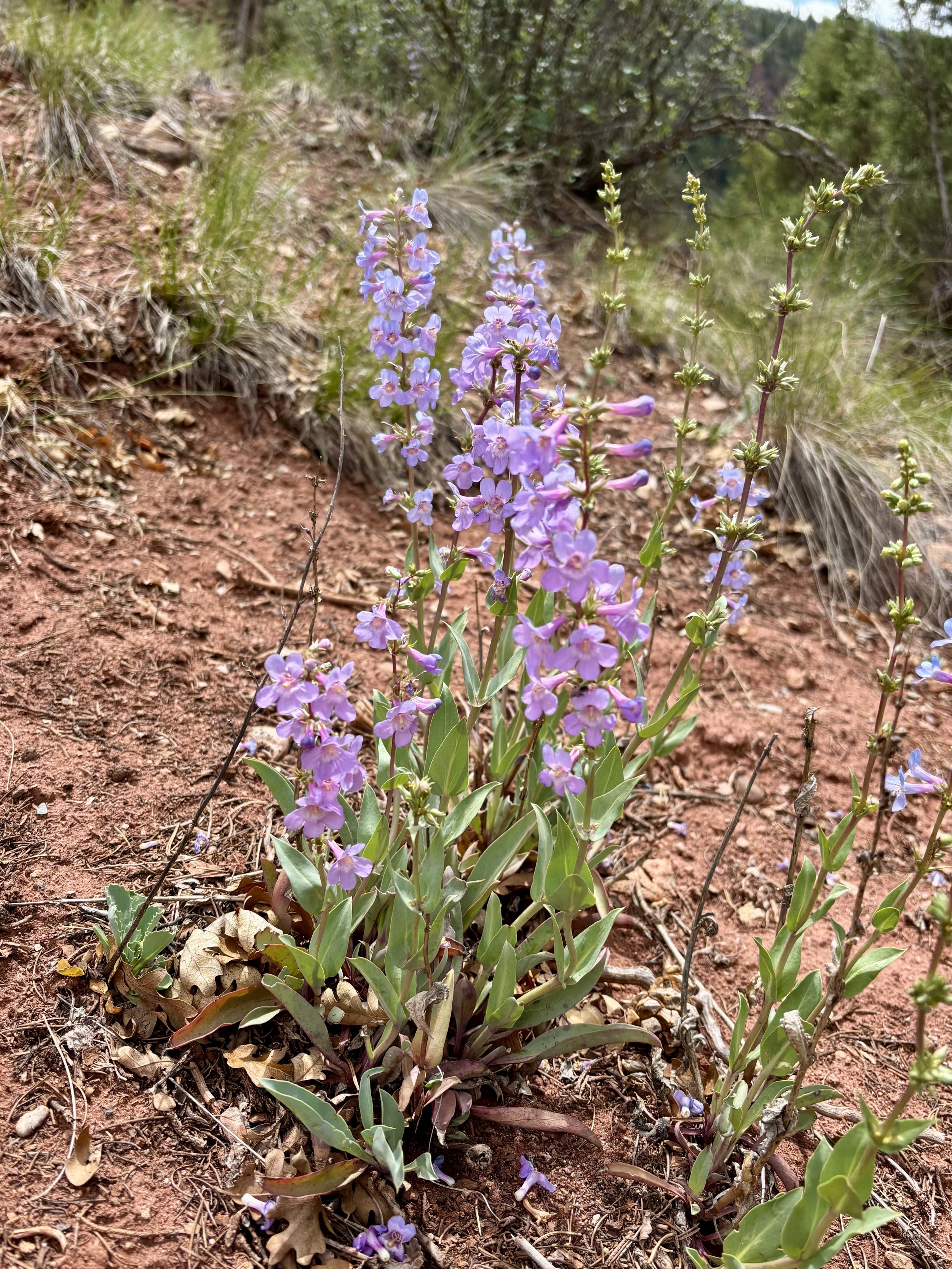

Osterhout Penstemon, Penstemon ousterhoutii

Purple Mustard, Chorispora tanellla
Yellow/Orange Flowers
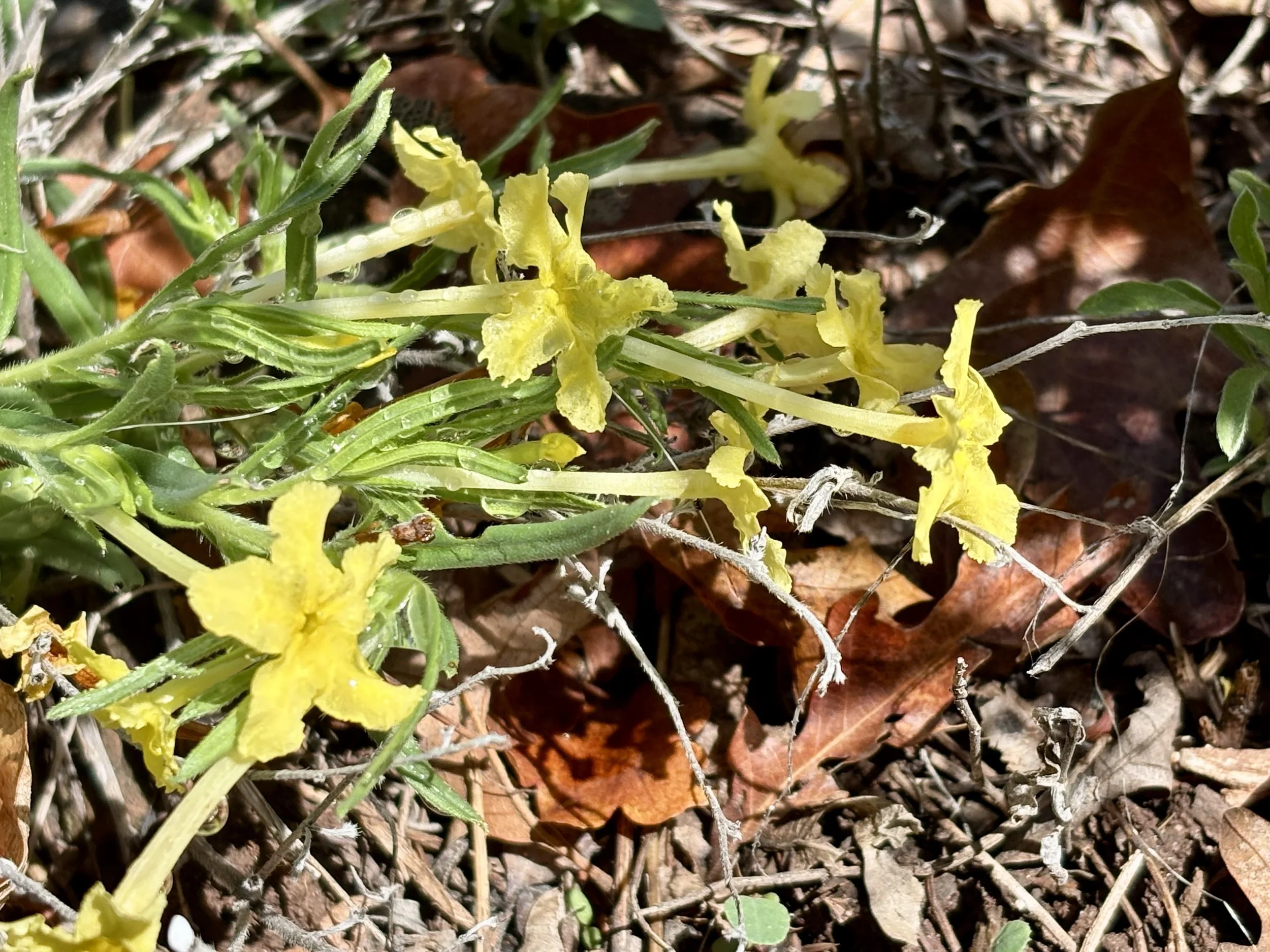
Fringed puccoon, Lithospermum incisum
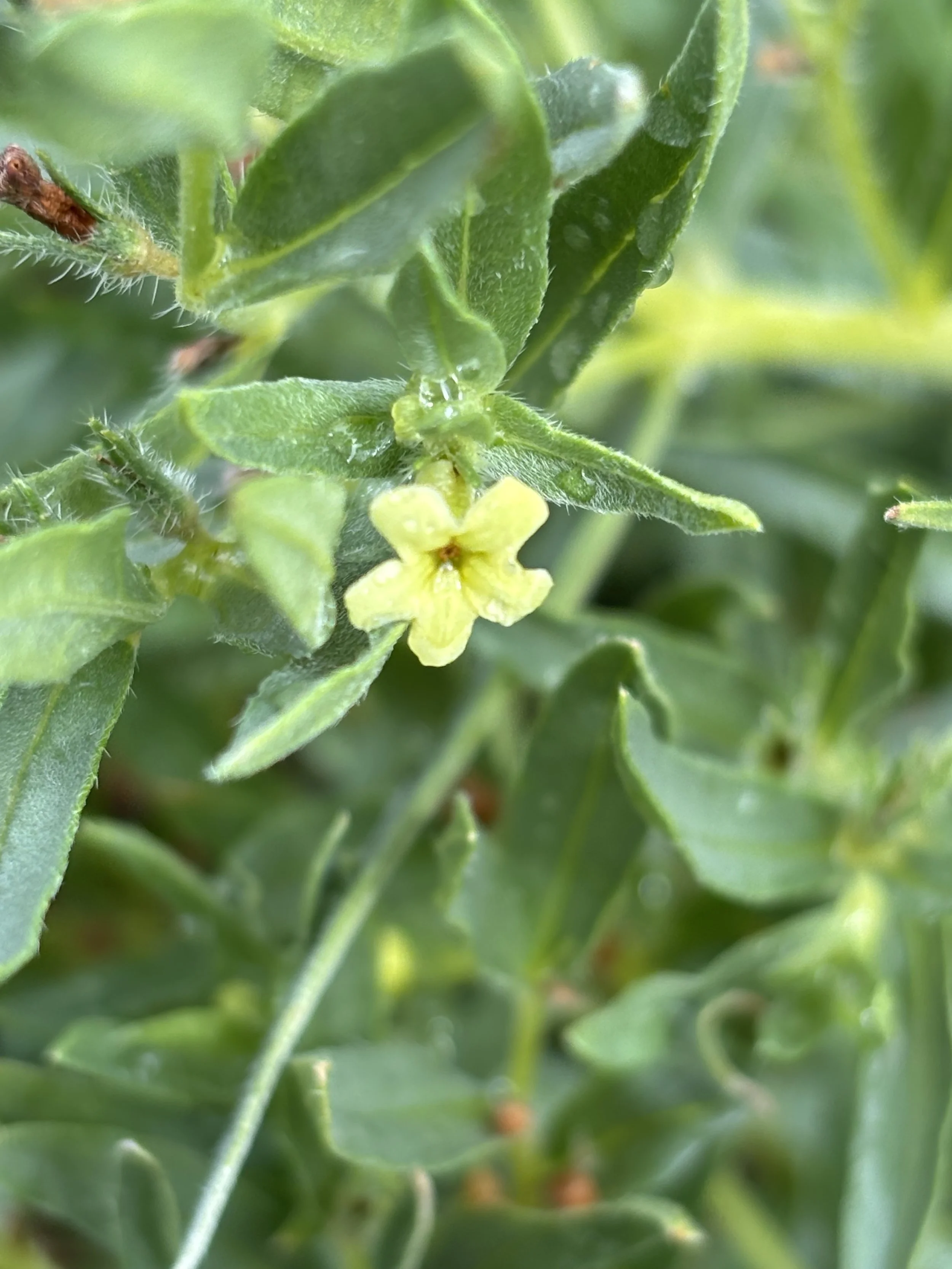
Western Stoneseed/ Field Puccoon, Lithospermum ruderale


Camelina or Littlepod Flax, Camelina microcarpa

Western hawkweed, Crepis occidentalis
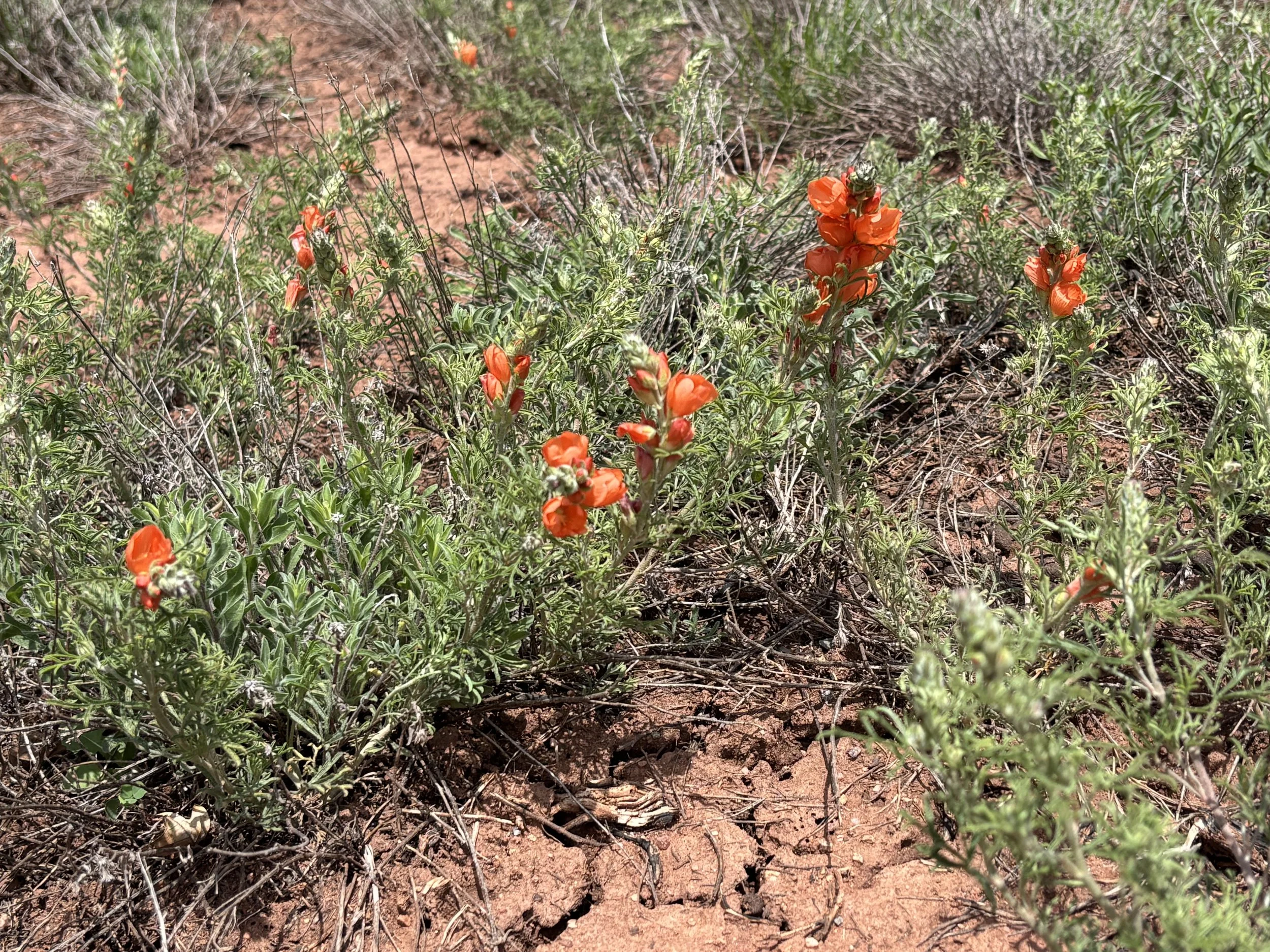
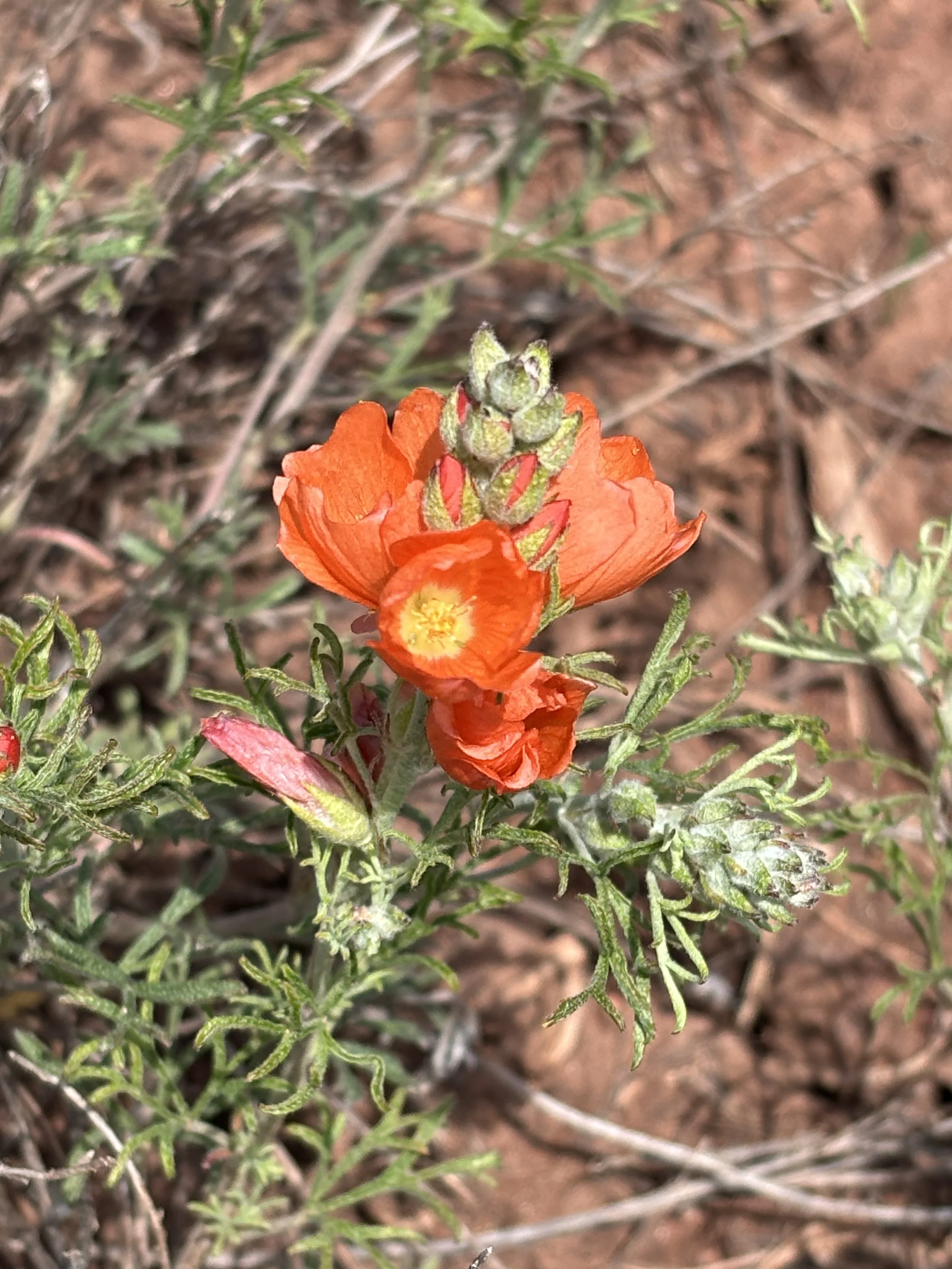
Copper Mallow, Sphaeralcea coccinea
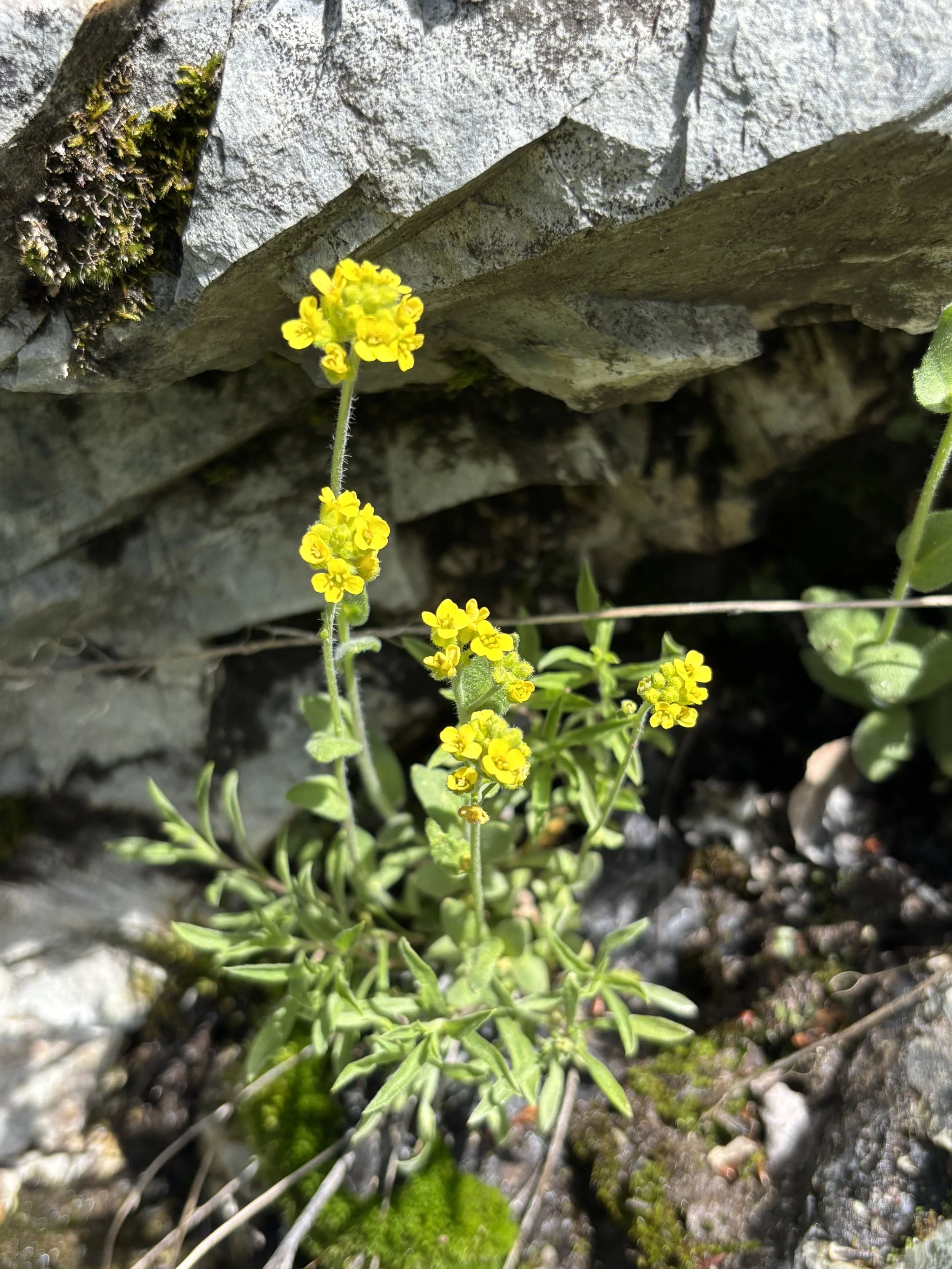
Showy Draba, Draba spectabilis
Wildflowers at Risk: Helping Colorado’s Natural Heritage Plant Survey
In Colorado, the conservation of rare and endangered plant species is overseen by the Colorado Natural Heritage Program (CNHP) based at the Fort Collins campus of Colorado State University (CSU). The CNHP maintains a rare plant field guide (there is wonderful photo gallery at this link); tracks, the location and condition of over 500 rare and imperiled plants; and helps to develop effective management plans for their protection and recovery. Of these plants, about 120 species are regarded as critically imperiled.
To help the CNHP monitor the status of at risk plants, the program is conducting a major new survey of its flora and fauna. A key goal is to enable pro-active planning for conserving at-risk species, anticipating climate change impacts, and supporting biodiversity. While CNHP staff are leading this effort, the state relies in significant part on volunteer efforts, many of which are led by members of the CoNPS.
Typically, the survey process starts with a review of historic field data on prior observations or Element Occurrences (EOs) of endangered plants. The information is held at a central Biotic Database maintained by Nature Serve, a national non-profit collaborative. Drawing on this database, which includes notes on population size, habitat health, and landscape context from prior years, CNHP and volunteer field workers locate and re-monitor these previously documented sites to assess their current status.
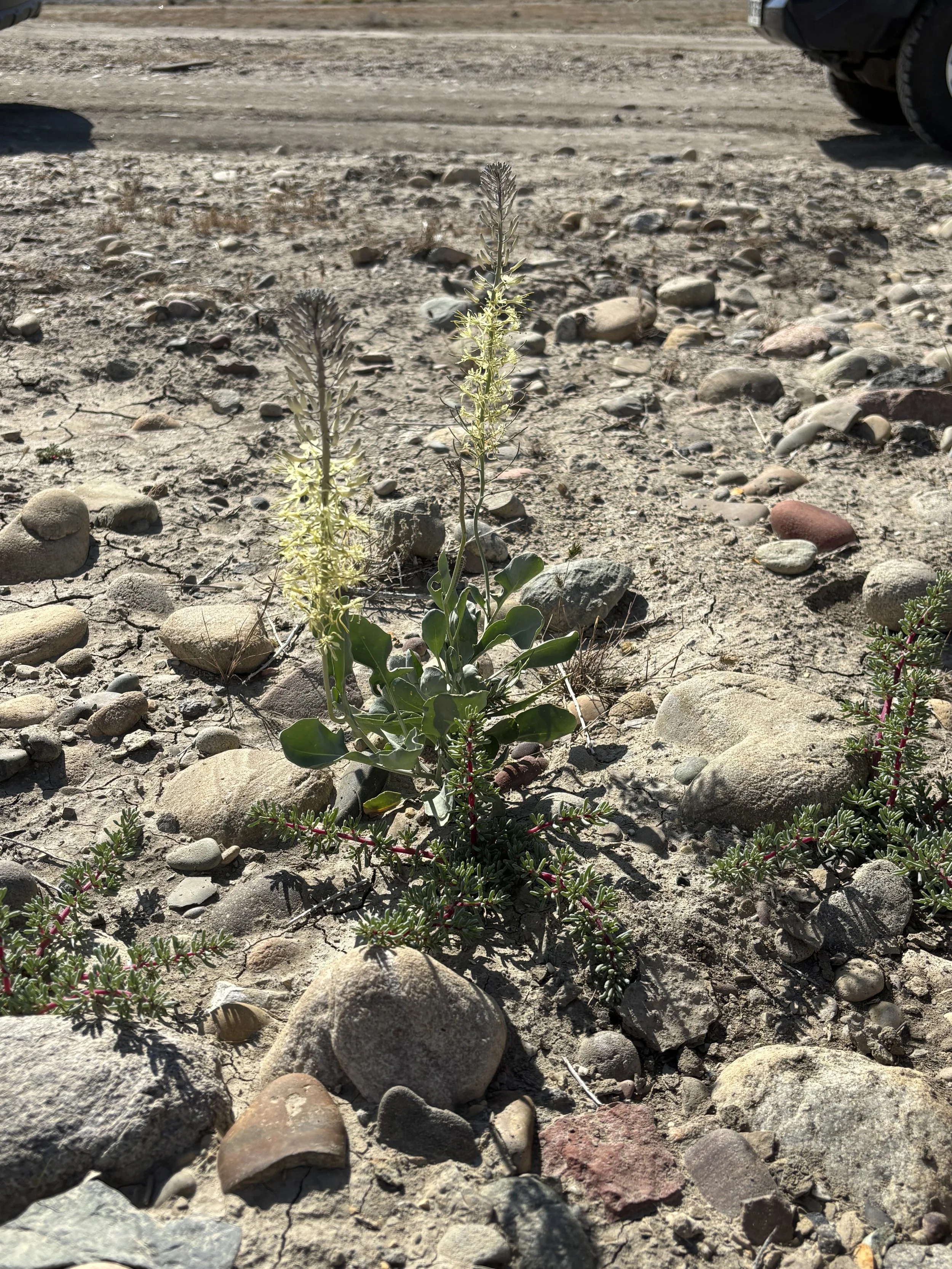
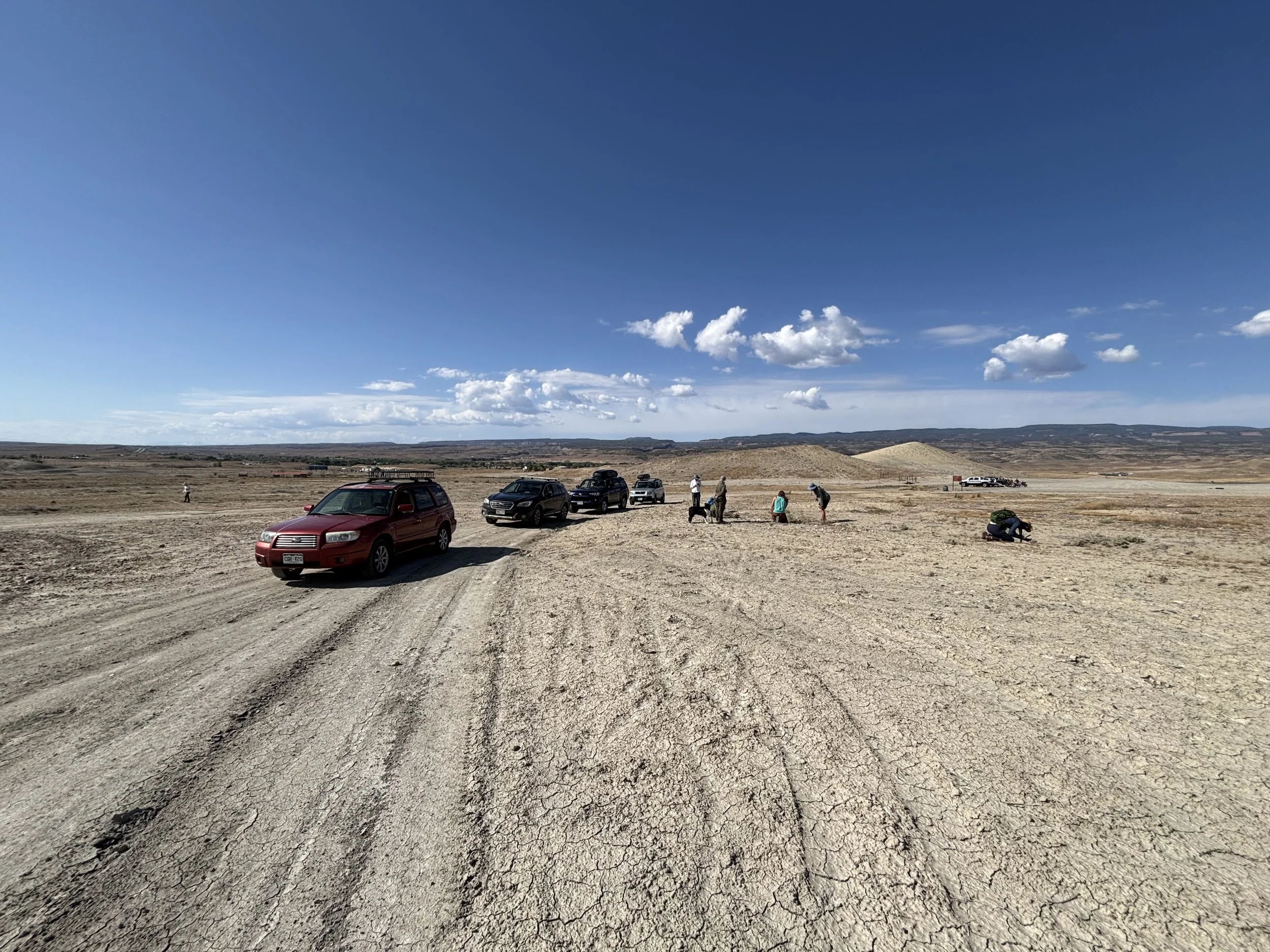
And that is how, on the morning after the CoNPS conference, I found myself standing in the barren Manco shale hills on public property near Whitewater, Colorado overseen by the Bureau of Land Management (BLM).. I was with a dozen other of the Society’s members and our job was to determine if two previously logged rare plants — Stanleya albescens (a white Princes’ Plume) and Cleomella palmeriana (Rocky Mountain Stickweed, a small yellow flower) — were still present.
We were fortunate with the first species and used iNaturalist to upload photos documenting a local population of over 100 plants. The Stanleya photos are publicly available, along with thousands of other survey results, at the CNHP project page for iNaturalist. However, we came up short with Cleomella; no new EOs were reported.
Every Plant Counts
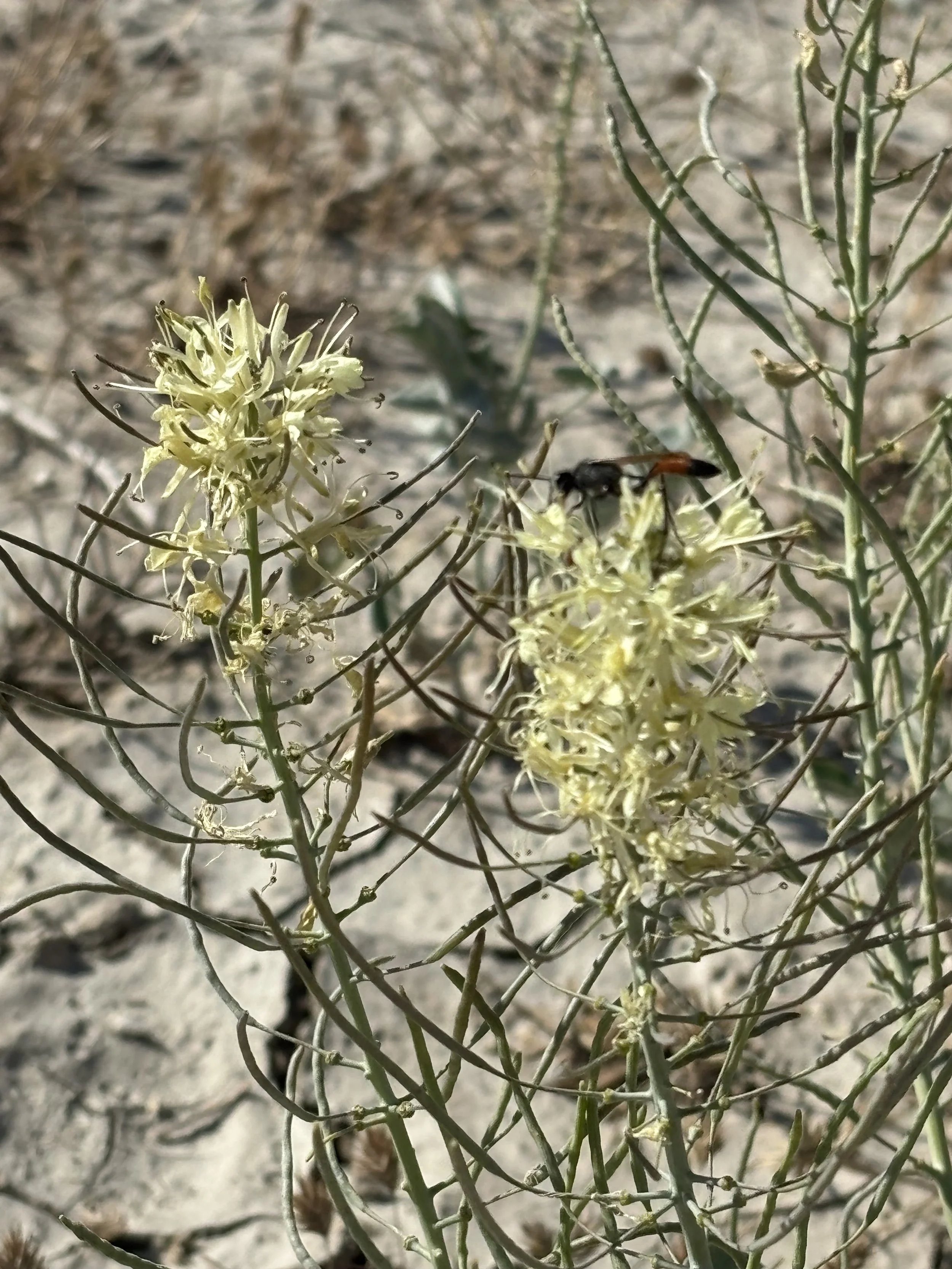
Highly adapted native plants, like Stanley albescens and Cleomella palmeriana, are a part of Colorado’s remarkable natural heritage and often play important roles in local ecosystems (e.g. sustaining pollinators —such as the thread-waisted wasp in right-most photo above, — which, in turn , help other species prosper). Losing any species means losing the opportunity to trace its adaptive behavior as well as its larger role in the environment.
Beyond that, as anyone knows who has paused to take in an unusual trailside bloom, each may be a fresh wellspring of wonder. Why is this plant in the world rather than not ? Why here ? Why now ? Why is it like this rather than like something else? Every flower prompting anew the same timeless questions. A rebirth of awe.
While Stanley albecens is plainly at risk — the landscape we monitored is a favorite site for off-road motorcycles (MX) which were in full throttle throughout our morning plant count — the CNHP’s database says a number of small populations exist across the southwestern part of the state. Hence, it currently has an “S3” status per the NatureServe Conservation guidlines.
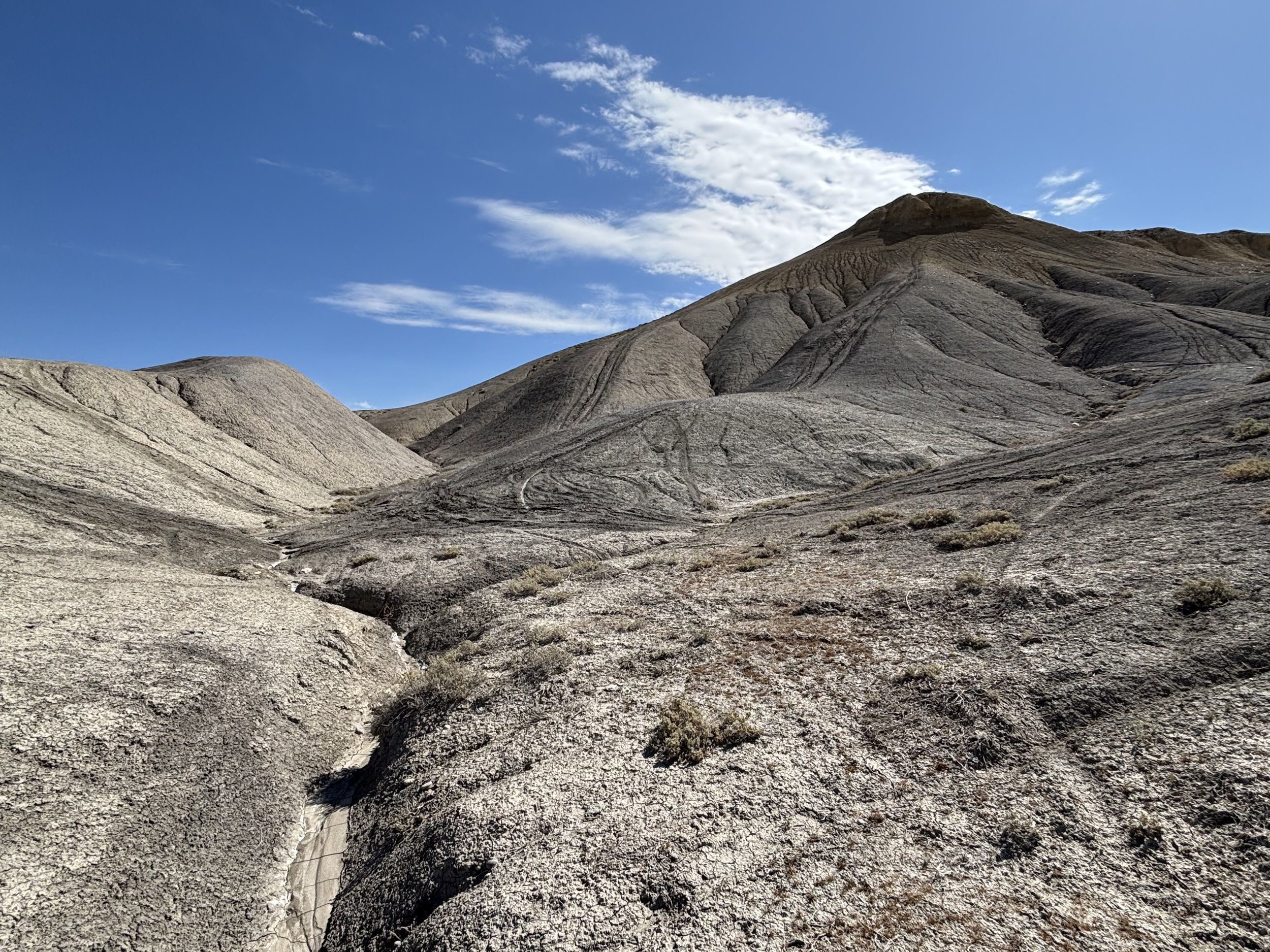
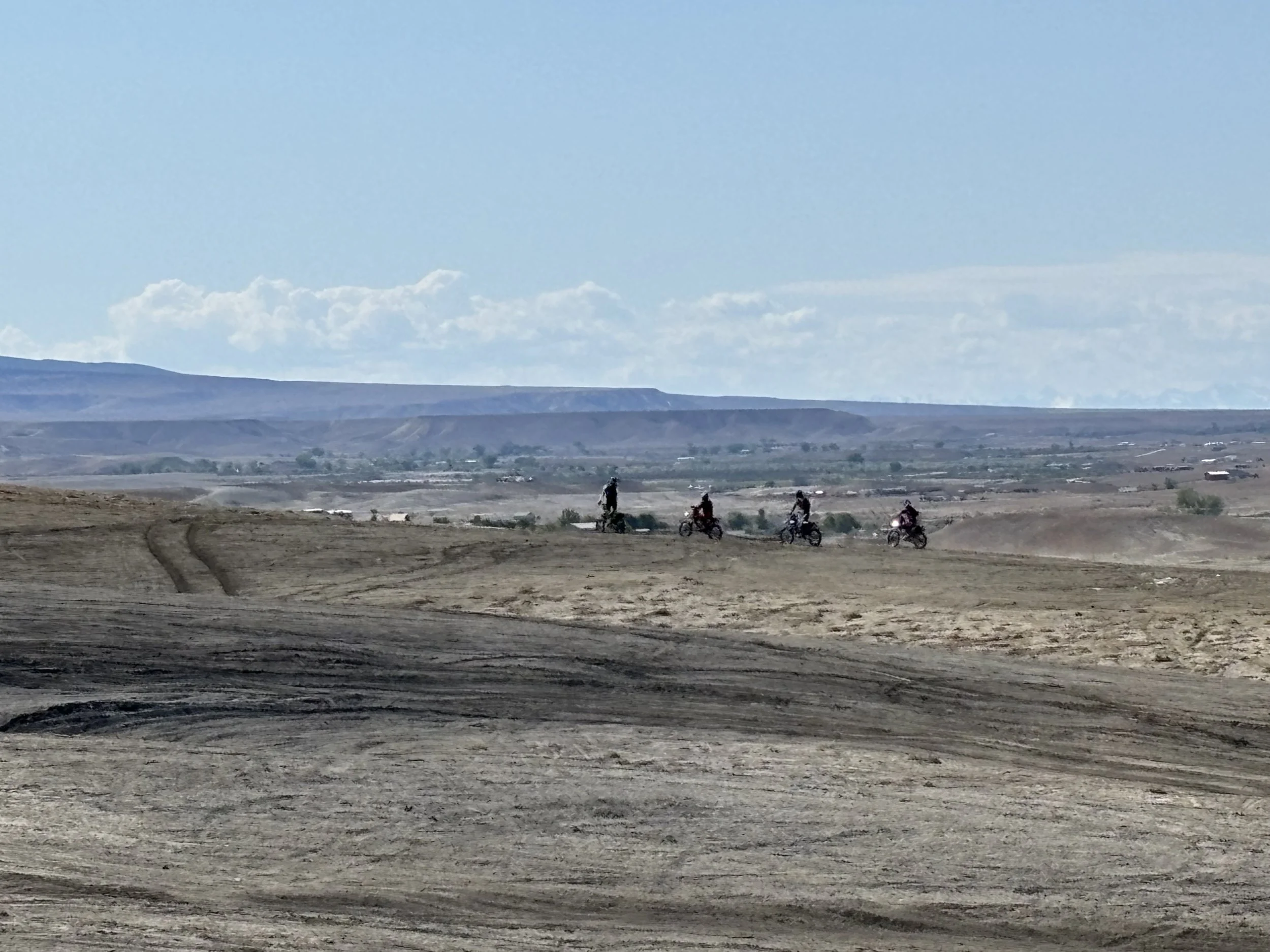
That means this plant “has between 21 and 100 known occurrences, or between 3,000 and 10,000 individual plants.” and, “while not immediately facing imminent extirpation (local extinction), the plant is sensitive to habitat loss, climate changes, or large-scale human disturbances.” Such, one supposes, being in the middle of a favorite MX park. (Anything goes these days, it seems, on some of our public lands..)
If you want to check on the risk status of your favorite plants, the CNHP master list can be accessed at this link. Interestingly, the list does not include Mostacillastrum purpusii — the uncommon species from the Mustard family noted at the outset of this post, perhaps because it has seldom been recorded in Colorado; or perhaps because my ID is incorrect. Comments welcome.